
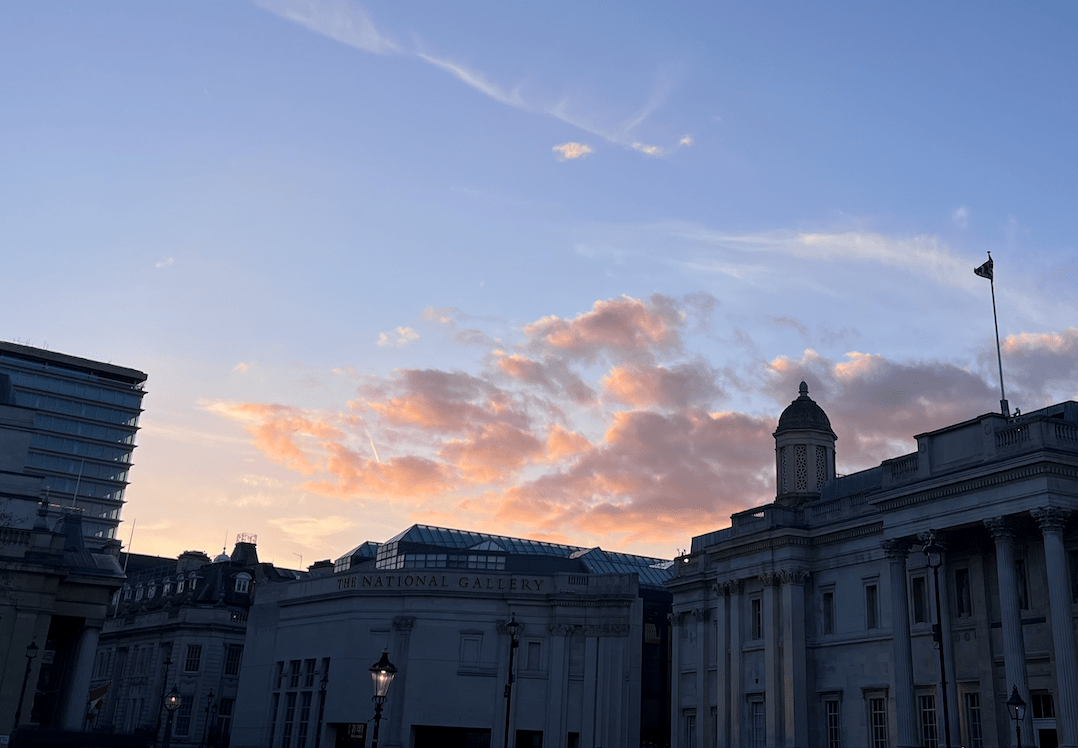
by Taylor Gray Moore
There was no wailing, at least none for him.
Order’s long to rust. So many sleeping
children wallow in the dust while sallow
old men pull each other’s teeth with bone pliers
along the edge of Belgrave Square—and let it burn.
Here, Sherlock Holmes will last be laid to rest.
Watson’s solemnly silent, hat in hand,
and fresh blood gushes from beneath his nails—
foreshadowing the mistake, at twilight,
when the rabble take him for a vampire and strike
through his heart with glass cross, cry victory
over a beastly sensation coursing
through the nation and driving the watchmen wild.
Baker Street lies empty now, quarantined,
all structures carried away brick by brick.
King Alfred tried to occupy the site, but was arrested—
rabble crying he ought’ve tried Bond Street instead.
Victoria arrived by yacht just in time
but, before she was able to intervene,
was mistaken for Canada and thrown
into the Thames to ferment another
ten thousand ten thousand years.
King Alfred’s bones lie buried ‘neath the river Fleet.
Belgrave is well guarded by teeming hordes.
They’ve found their great republic there, you see—
already a rival to the glory
of Belgium, Bosnia or Cat’lunya.
Exquisite corpses hang from every flagpole.
Barricades have been erected around
silent, sleeping Holmes: not for security
but to preserve some illusion of order.
(Elizabeth the Great later arrived to
claim the genius’s corpse—arrived with pomp
and circumstance befitting any foreign lord,
but balked when authorities demanded
photo ID. Bess then left, came back with
Jack the Ripper—they laid before the gates
in protest. Sheets were draped o’er them, they
were forgotten; became more cobblestones for the newly anointed rabble’s rushing feet.)
Hark! Caught among the flowering embers,
little Saint George creeps ’round the leaves and bows
towards the celebrated body.
He can only move nearer now with the
flames of the greenery burning ever
closer. His brow is caked with sweat, his heart with
fear. Onlookers would mark his progress, if
any were watching, but he is alone—
he becomes somewhat heroic in his
loneliness; almost worthy of couplets.
He flees the scalding air, ever deeper
into the burning world and towards the
gloried sarcophagus at its centre—
it lies at rest under velvet capes! Silk
effigies of weeping widows gather
’round it, their eyes haphazardly splattered
with black ink representing mourners’ tears,
hands clasped together and holding a string
sewn through each and every one so the life-
less things are all connected together
as one.
Our youth comes finally to the coffin
and, lick of heat lusting after him,
opens the lid and climbs in on top of
the famed master of deduction lying
cold as stone, stiff as the boards encasing him—
the holy mind finally rendered silent.
George clings as a babe to his mother’s breast.
Meanwhile, outside, some irrelevant chaos has erupted
as Clio arrives, press and entourage in tow,
to claim the body as her own and pulls all
attention from the searing tomb itself.
The sewn women, remade maidens, collapse
into their ash.
Lonely in the inferno, the babe gazes into the lovely detective’s
long lost eyes, the heat of the blaze beginning
to overtake the chill of the corpse. The door
has closed behind; the lid has plunged down over
his fearful mistake. High priests in far-flung lands
are already bowing before his graven image, already
as the flames lick through the wooden vessel.
While outside the teeming masses vanish though the event
horizon of the spectacle, the young saint cries
out at the falling ashes of his container; memories
rip apart at their lineaments as the blaze touches his mind.
Photo by Flora Molnar


